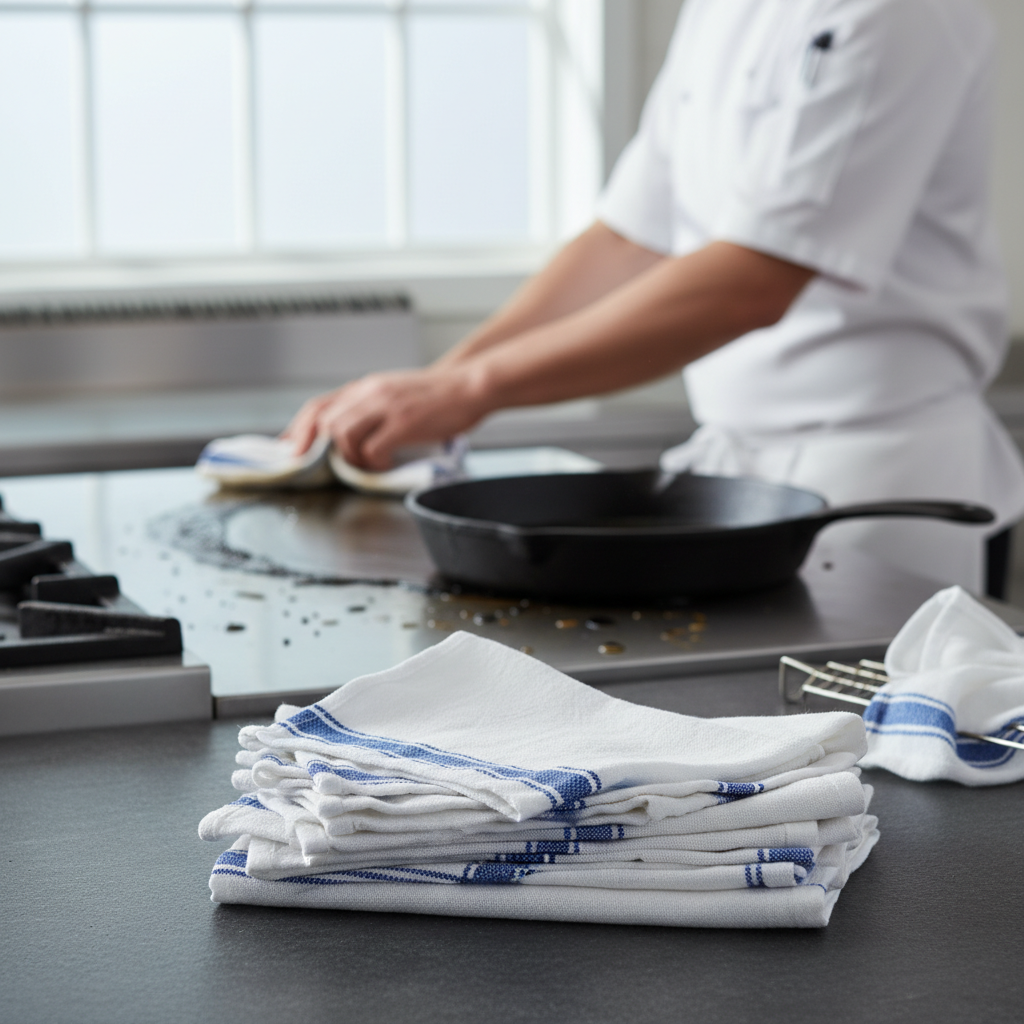
Transforming a simple kitchen towel into a personalized masterpiece is a rewarding craft that adds a unique touch to any home or makes a thoughtful gift. But with a myriad of options available, selecting the perfect kitchen towel for your embroidery or crafting project can be a daunting task. As someone with over a decade of experience in kitchen textiles, I understand the nuances that make a towel ideal for both utility and artistic expression. This guide will walk you through everything you need to know to choose the best kitchen towels, ensuring your creations are not only beautiful but also durable.
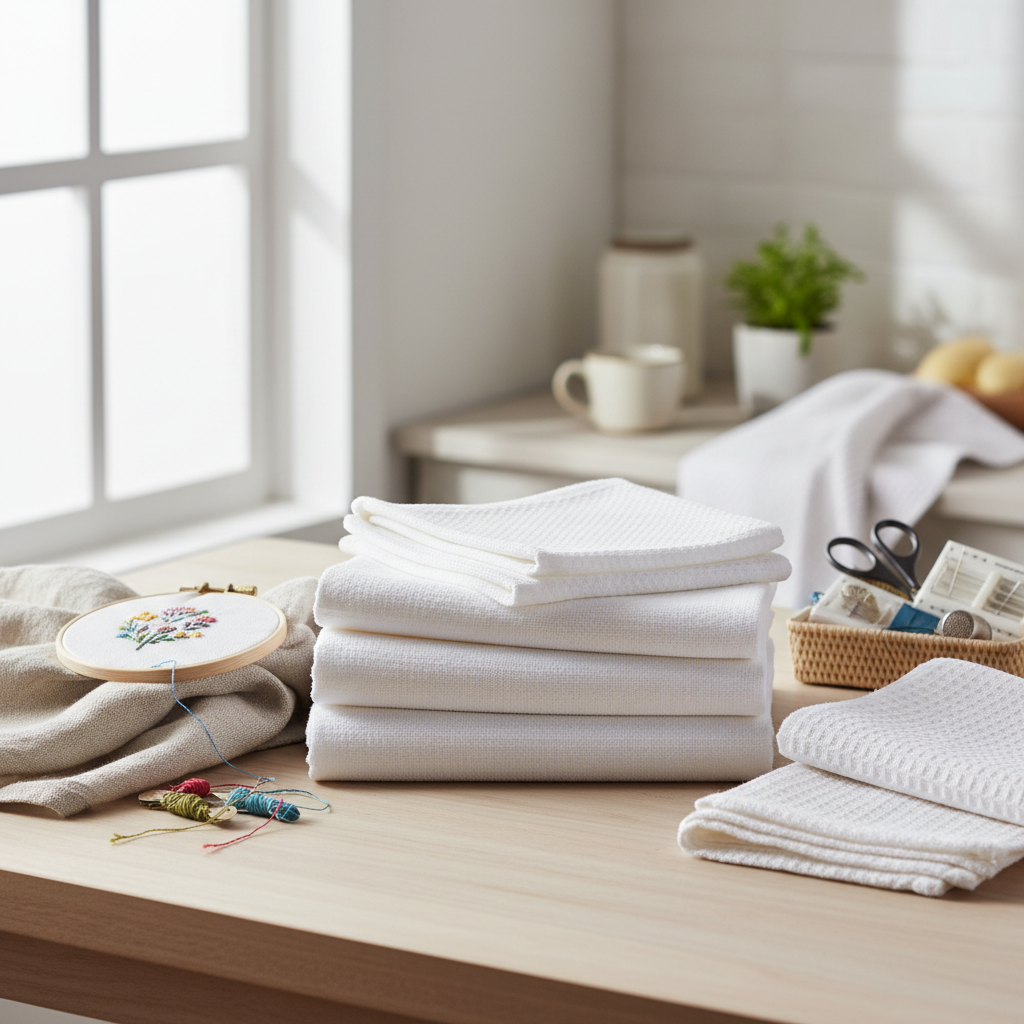
What Are Kitchen Towels for Embroidery and Crafting?
Kitchen towels traditionally serve a practical purpose: drying dishes, wiping spills, and keeping kitchen surfaces clean. However, a specific category of kitchen towels, often referred to as “blanks,” serves as a canvas for creative expression. These towels are chosen for their fabric composition, weave, and overall quality, which allow them to be easily embellished with techniques like hand embroidery, machine embroidery, cross-stitch, and various fabric crafts. Unlike standard utility towels, those selected for crafting prioritize a stable surface that holds stitches well and showcases intricate designs.
Why Choose Specific Kitchen Towels for Crafting?
The success and longevity of your embroidered or crafted kitchen towel largely depend on the initial fabric choice. Using just any towel can lead to frustrating results, such as puckered stitches, uneven tension, or designs that don’t stand the test of time.
Choosing the right towel offers several benefits:
- Superior Stitch Quality and Durability: Fabrics designed for embroidery provide a stable foundation, preventing stitches from pulling or distorting. This ensures your intricate designs remain crisp and intact, even after repeated washing.
- Ease of Working: A well-chosen towel makes the crafting process smoother. Fabrics with the right weight and weave are easier to hoop, maintain tension, and stitch through, reducing frustration for both beginners and experienced crafters.
- Enhanced Aesthetic Outcome: The fabric’s texture, color, and drape significantly impact the final look of your design. A smooth, lint-free surface allows your embroidery threads to shine, creating a professional and polished appearance.
- Longevity and Resilience: Crafted kitchen towels are often cherished items. Selecting a durable fabric ensures that your hard work withstands daily use and frequent laundering, preserving the beauty of your creation for years to come.
Common Types of Kitchen Towels for Embroidery and Crafting
When it comes to selecting the best canvas for your kitchen towel projects, certain fabric types consistently outperform others. Here’s a breakdown of the most popular and effective choices:
Flour Sack Towels
Flour sack towels are often considered the “gold standard” for embroidery, and for good reason. Made from 100% cotton, they are characterized by their plain, often diagonal weave, resulting in a soft, absorbent, and virtually lint-free surface. This diagonal weave is crucial for maintaining even thread tension and ensuring a smooth, snag-free finish.
- Pros for Crafting: Flour sack towels excel in thread retention and dimensional stability, allowing stitches to remain crisp and designs to pop. Their smooth surface acts as an ideal blank canvas, suitable for both simple motifs and complex designs. They are also generally affordable and versatile.
- Cons/Considerations: While excellent, some lower-quality flour sack towels can be too thin or stretchy. For these, or for beginners, using an embroidery stabilizer is highly recommended to provide extra body and prevent fabric distortion during stitching.
|
Our Picks for the Best Kitchen towel in 2026
As an Amazon Associate I earn from qualifying purchases.
|
||
| Num | Product | Action |
|---|---|---|
| 1 | Homaxy 100% Cotton Waffle Weave Kitchen Dish Cloths, Ultra Soft Absorbent Quick Drying Dish Towels, 12 x 12 Inches, 6-Pack, Dark Grey |

|
| 2 | Scott Paper Towels, Choose-A-Sheet, 6 Double Rolls = 12 Regular Rolls (108 Sheets Per Roll) |
|
| 3 | Premium Kitchen Towels (20”x 28”, 6 Pack) | Large Cotton Dish Towels | Flat & Terry Highly Absorbent Kitchen Linen Set with Hanging Loop | Gray |
|
| 4 | Miss Adola Flour Sack Kitchen Towels - Set of 2 Chinoiserie Dish Towels with Hanging Loop 18x26 Inch Absorbent Decorative Cotton Tea Towel Blue and White Dishcloths for Cleaning, Bird Flower |
|
| 5 | Bounty Paper Towels Quick Size, White, 16 Family Rolls = 40 Regular Rolls |
|
| 6 | Bounty Quick-Size Paper Towels, White, 8 Family Triple Rolls = 27 Regular Rolls |
|
| 7 | Miss Adola 2pcs Microfiber Kitchen Towels - Boho Kitchen Towels Set of 2 with Hanging Loop Decorative Absorbent 18x26 Inch Hand Towel Colorful Design Dish Cloth for Housewarming Gift, Mandala |
|
| 8 | LANE LINEN Cotton Kitchen Towels Set, 6-Pack – Absorbent, Quick-Drying Dish Towels, 18" x 28", Premium Hand and Tea Towels - Olive |
|
| 9 | Sparkle Pick-A-Size Paper Towels, 6 Double Rolls (660 Sheets Total) - Strong 2-Ply Towels for Kitchen Cleanup and Everyday Messes |
|
| 10 | Bounty Quick Size Paper Towels, White, 8 Family Rolls |
|
100% Cotton Towels (General)
Beyond flour sacks, general 100% cotton kitchen towels are a widely available option. Their absorbency and durability make them kitchen staples, and their natural fibers are generally receptive to embroidery.
- Pros for Crafting: High-quality cotton towels offer good support for stitches and can withstand frequent washing without losing shape. Look for towels with a tight weave and consistent fabric density to ensure even, professional results.
- Cons/Considerations: The quality of general cotton towels varies significantly. Avoid flimsy or overly thin options, as they may struggle to hold stitches securely and can show through the back of your work.
Linen Towels
Linen, derived from the flax plant, is renowned for its strength, natural luster, and resistance to wear and tear. It offers a sophisticated, rustic texture that many crafters adore.
- Pros for Crafting: Linen’s inherent strength makes it ideal for dense embroidery and projects intended to become heirloom pieces. It’s a fantastic choice for surface embroidery and thread painting, offering a beautiful drape.
- Cons/Considerations: Pure linen can be quite expensive. Its characteristic “slubs” (small, natural irregularities in the yarn) can sometimes interfere with very fine stitches, though many find this texture adds to its charm. Linen-cotton blends are a popular compromise, offering many benefits of linen at a more accessible price point.
Cotton Blends (e.g., Cotton-Linen, Cotton-Polyester)
Blended fabrics combine the attributes of different fibers, aiming to enhance performance or reduce cost. For crafting, some blends are specifically engineered for needlework.
- Pros for Crafting: Blends like Fiddler’s Cloth (cotton, linen, polyester) offer more texture, while Jobelan (cotton-rayon) provides a soft, smooth, often shiny surface that resists wrinkling. These are frequently used for counted thread work due to their even weave.
- Cons/Considerations: Be cautious with synthetic-heavy blends (e.g., high polyester content), as they can feel spongy, be abrasive on fine embroidery threads, and may not hold stitches as well as natural fibers.
Comparison Table: Kitchen Towel Fabrics for Crafting
| Feature | Flour Sack (100% Cotton) | General 100% Cotton | Linen | Cotton Blends (e.g., Cotton-Linen, Cotton-Rayon) |
|---|---|---|---|---|
| Weave | Plain, often diagonal | Various | Plain, can be twill | Various (evenweave for counted work) |
| Feel | Soft, smooth, lint-free | Varies | Rustic, can have slubs | Smooth (Jobelan), textured (Fiddler’s) |
| Embroidery Suitability | Excellent (surface, machine) | Good (surface) | Excellent (dense, surface, counted) | Good (depends on blend & weave) |
| Durability | Medium-High | Medium-High | High | Varies (often good) |
| Absorbency | High | High | Medium | Varies |
| Cost | Low-Medium | Low-Medium | High | Medium-High |
| Key Advantage for Crafting | Smooth canvas, good thread retention | Versatile, widely available | Strength, heirloom quality | Tailored for specific techniques |
| Considerations | Can be thin/stretchy; may need stabilizer | Quality varies | Expensive, slubs can be an issue | Synthetics can be tricky, check composition |
How to Choose the Best Kitchen Towels for Your Craft Projects (Buying Guide)
Selecting the ideal kitchen towel for your embroidery project involves considering several factors to ensure your efforts yield a beautiful and lasting result.
-
Identify Your Project Type:
- Hand Embroidery: Requires a fabric that is stable enough to hold tension in a hoop but pliable enough for needle manipulation. Flour sack and quality cotton are excellent.
- Machine Embroidery: Demands a fabric with a strong, consistent weave that won’t distort under the machine’s speed. Premium flour sack towels or sturdier cottons are preferred.
- Cross-Stitch/Counted Thread Work: Benefits from an evenweave fabric like Aida or Jobelan, where threads are evenly spaced for precise counting.
- Decorative vs. Utilitarian: If the towel is purely decorative, you might prioritize aesthetics. For daily use, durability and ease of washing are key.
-
Consider Fabric Weight and Weave:
- Weight: Opt for a fabric with a bit of weight to it. Flimsy or too thin towels can cause stitches to pull the fabric or make the backing visible. Sturdier towels are generally easier for beginners.
- Weave: A tight, consistent weave is crucial. Avoid loosely woven fabrics that might fray or allow holes to enlarge around stitches. Diagonal weaves (common in flour sacks) are praised for thread retention.
-
Material Composition:
- Prioritize natural fibers like 100% cotton or linen, or high-quality blends where natural fibers dominate. Natural fibers generally provide a better hand (feel) and are more forgiving for embroidery.
- While some blends are good, be wary of high synthetic content as it can be abrasive on threads and feel spongy.
-
Surface Texture:
- For most embroidery, a smooth, lint-free surface is preferable. This allows your stitches to lay flat and appear crisp.
- Rustic textures with slubs (like some linens) can be charming but might pose challenges for very fine or detailed work.
-
Size and Quantity:
- Consider the finished size you desire. Standard kitchen towels are usually 16×28 inches or 20×30 inches.
- If you’re crafting multiple gifts or running a small business, look into wholesale options from reputable suppliers like Cotton Creations, who offer bulk pricing.
-
Color:
- White and natural (unbleached) colors are the most versatile canvases, allowing your thread colors to truly pop.
Top Picks: Recommended Kitchen Towels for Embroidery and Crafting
Based on expert recommendations and crafting suitability, here are some top choices that will serve as an excellent foundation for your creative endeavors:
- Premium Flour Sack Towels: These are consistently lauded as the top choice. Look for brands that specify “premium” or “heavyweight” to ensure a strong, even weave that holds stitching without puckering or thinning. Brands like Cotton Creations’ Craft Basics Premium Flour Sack Towels are specifically designed to withstand machine embroidery and prevent distortion. Their superior weave ensures your project will look professional.
- Vintage Style Dish Towels: For those seeking a slightly sturdier option, especially beginners, vintage-style dish towels are a great alternative. Brands such as those offered by Colonial Patterns provide a heavier fabric weight that is easier to stitch on than very thin flour sacks.
- High-Quality 100% Cotton Tea Towels: Many reputable fabric and craft stores offer 100% cotton tea towels specifically marketed for embellishment. These are typically thicker than standard flour sacks but still offer a smooth, even surface ideal for various embroidery techniques. Always check the feel and weave before purchasing.
Tips for Using and Caring for Embroidered Kitchen Towels
To ensure your embroidered kitchen towels look their best and last for years, proper usage and care are essential.
- Utilize Stabilizers: For thinner fabrics, stretchy materials, or complex machine embroidery designs, an embroidery stabilizer is your best friend. Water-soluble stabilizers are excellent as they disappear completely after washing, leaving no residue.
- Hoop Tightly and Evenly: When hooping your towel, ensure the fabric is pulled taut like a drum. Uneven tension in the hoop can lead to puckering and distortion of your design.
- Avoid Pre-Washing New Towels (Pre-Embroidery): Many professionals recommend not pre-washing new kitchen towels before embroidering. The commercial sizing applied to new towels acts as a natural stabilizer, adding body to the fabric and reducing movement during stitching.
- Gentle Washing Post-Embroidery: Once embroidered, wash your towels gently. Hand washing or a delicate machine cycle with cold water is ideal. Use a mild detergent and avoid harsh bleaches that could damage threads or fabric.
- Air Dry or Tumble Dry Low: To best preserve your embroidery, air dry your towels flat or hang them. If using a dryer, tumble dry on a low heat setting to prevent shrinkage and protect the stitches.
- Iron with Care: Iron your embroidered towels on the reverse side of the embroidery, preferably with a pressing cloth. This helps protect the stitches and prevents them from flattening.
- Mind the Purpose: Decide if your embroidered towel is primarily for decorative display or everyday kitchen tasks. Heavily used towels will naturally show more wear, regardless of fabric quality or care.
“The choice of fabric is paramount in embroidery; it’s the silent partner that either elevates your stitches or sabotages your efforts.” – Your Name, Kitchen Textile Expert at reviewjpt.com
Conclusion
Choosing the best kitchen towels for embroidery and crafting is the first step toward creating beautiful, lasting pieces. By understanding the characteristics of different fabrics—from the versatility of 100% cotton flour sacks to the enduring elegance of linen—you can make informed decisions that ensure your creative projects shine. Remember to prioritize stability, weave, and material composition to achieve superior stitch quality and a professional finish.
Ready to transform your kitchen with personalized flair? With the right towel in hand, your crafting possibilities are endless. What kind of design will you bring to life on your next kitchen towel?
Frequently Asked Questions
What is the best fabric for machine embroidery on kitchen towels?
For machine embroidery, 100% cotton flour sack towels with a strong, tight weave are highly recommended. Their dimensional stability helps prevent puckering and distortion under the machine’s tension, ensuring crisp and clean stitches.
Should I pre-wash kitchen towels before embroidering?
Generally, it’s best to avoid pre-washing new kitchen towels before embroidering. New towels often contain sizing that acts as a natural stabilizer, providing extra body and reducing fabric movement during the stitching process for a smoother result.
How do I prevent puckering when embroidering a kitchen towel?
To prevent puckering, ensure your towel is hooped very tightly and evenly, like a drum, without stretching the fabric. Using an appropriate stabilizer for the fabric weight and design density can also significantly help in maintaining fabric stability.
Can I embroider on microfiber kitchen towels?
While technically possible, embroidering on microfiber kitchen towels is generally not recommended. Microfiber’s texture and synthetic composition can be challenging for embroidery, leading to issues with thread tension, skipped stitches, and an undesirable final appearance with excess lint or a spongy feel.
What is a flour sack towel?
A flour sack towel is a thin, lint-free towel traditionally made from 100% cotton, originally repurposed from flour bags. Its plain, often diagonal weave makes it soft, absorbent, and an excellent, stable surface for various embroidery and crafting projects.